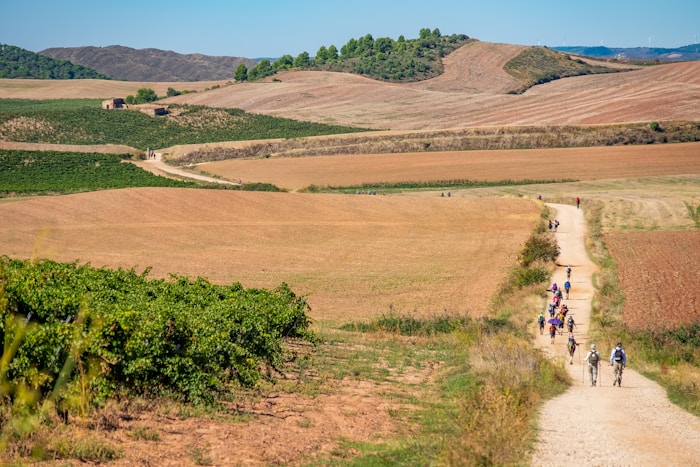
The Camino de Santiago is one of the oldest walking routes in the world. Millions of people walk it every year. Almost all of them fly to the start.
You don't need to. The most popular starting points - Saint-Jean-Pied-de-Port in France, Sarria in Galicia, Porto in Portugal - are all reachable by train from London without flying. And arriving overland, having already travelled under your own power for part of the journey, sets exactly the right tone for what follows.
To Saint-Jean-Pied-de-Port (Camino Frances): Eurostar to Paris, TGV to Bayonne (around 5 hours from Paris), regional train to Saint-Jean-Pied-de-Port (1 hour). Total around 9-10 hours from London.
To Porto (Camino Portugues): Eurostar to Paris, overnight train to Madrid, morning train to Lisbon, train to Porto. Around 24-28 hours. Porto to Santiago is around 250km of walking.
To Sarria (Camino Frances, final 100km): Train to Paris, overnight to Madrid, train to Lugo or Sarria. For those with limited time, starting at Sarria completes the minimum distance for the Compostela certificate.
Carbon comparison: a return flight from London to Santiago de Compostela produces around 0.38 tonnes of CO₂. The train to Saint-Jean produces around 0.03 tonnes.
Camino Frances - the classic route, 780km from Saint-Jean-Pied-de-Port over the Pyrenees to Santiago. Takes 30-35 days at a comfortable pace. Busy but well-supported with excellent infrastructure. The most social Camino - you'll walk alongside people from all over the world.
Camino Portugues - starting from Lisbon (620km) or Porto (250km). The coastal variant from Porto is particularly beautiful. Less crowded than the Frances, especially the first half.
Camino del Norte - along the northern Spanish coast. Wilder, more dramatic scenery and significantly fewer pilgrims. Harder in terms of terrain but rewarding for those who want a quieter experience.
Accommodation (albergues) ranges from £10-20 per night in dormitories. Private rooms are available at most towns for £30-60. Book ahead for the first and last few stages in peak season (June-August) but otherwise walking without bookings is generally fine.
The route is well-marked with yellow arrows and scallop shell waymarkers throughout. Navigation apps like Buen Camino or Wise Pilgrim are useful but largely unnecessary on the main routes.
Feet: blister prevention matters more than almost anything else. Break in your boots thoroughly beforehand. Wool socks. Leukotape for known problem spots before they become blisters.
April-June and September-October are ideal. July and August are very busy and hot, particularly in central Spain. November to March is quieter and often beautiful but some albergues close.